Showing posts with label more questions than answers. Show all posts

Sunday, January 16, 2011

Hey, Baby, What's Your Sign: On Labels and Perceptions

Is this the face of a Libra... or a Virgo?

Have you heard the news? Because the moon’s gravitational pull has caused the earth to “wobble” on its axis, your zodiac sign might not be what you think it is. According to an article that came out last week, this shift means that the dates commonly associated with the various signs are off by almost an entire month.

This means that I’m now a Leo, not a Virgo like I always thought. Wait. A Leo? Me? That couldn’t possibly be true. I mean, I’m a classic Virgo: analytical, observant, reliable, independent, and yes, I do tend to over think things from time to time. But as surprising as this revelation was, I was even more surprised by how upset I felt, especially since I don’t really put that much stock in horoscopes. Still, being told that I’m not a Virgo after all this time felt weird. I’ve spent my entire life believing one thing about myself, and it’s hard to accept this new identity.

It makes sense, though. Humans like to categorize things because it helps us make sense of our world, and once we classify something in a particular way, we are very reluctant to change the way we think about it. That’s probably why I feel so resistant to the idea that I’m really a Leo, even if I do have some of the typical characteristics.

We do this to our dogs, too. We label them with words like “dominant,” or “submissive.” We call them “shy,” or “outgoing,” or “fearful,” or “confident.” We might even call them “reactive” and “anxious.” And each time we do this, we begin to think about our dog differently.

Is this bad? Not necessarily. Labels give us easy ways to describe complicated concepts. They can help us understand why our dogs are acting a certain way. They can help us feel empathy for them, even when they’re doing things we don't like. They allow us get them the help they need from trainers or vets.

But because labels shape the way we perceive our dogs, it can cause us to give up on them or do unpleasant things to them. How many people don’t bother training their dogs because they’re “stubborn”? How many dogs are subjected to forceful procedures because they’re “trying to be the alpha”? How many dogs are put to sleep because they’re “aggressive”? And how many dogs could live better lives if their people were able to look past the labels they’ve been given?

So, what’s the answer? To be honest, I’m not sure. Part of me wants to say that we should quit labeling our dogs, but I know that labels can be just as helpful and they can be harmful. There’s no point in throwing out the baby with the bathwater, after all.

I guess the best course of action is to assign labels cautiously. Are we labeling our dogs because it helps us understand them better, or because it allows us to make excuses? Does this label limit my dog’s potential or will it help him grow? How was the label chosen; is it based on careful, objective observation, or are we throwing around words with little meaning? Does the label apply all the time, or only in certain circumstances? Is this label accurate?

And of course, we should always question that label once it’s been given. Does this label still make sense? Has my dog changed and outgrown the label? Does using this label improve my relationship with my dog, or does it damage it?

I have labeled Maisy as many things, starting right at the beginning with the title of my blog. I’ve called her reactive, a word that has a negative connotation, even though people can’t seem to agree on what it means. Has that changed my feelings about her? No, not in the least, but whereas calling her reactive gives me a framework for helping her, it may have unintended consequences. Maybe it unfairly changes the way others view her.

Maisy’s visit with the veterinary behaviorist garnered her a whole new set of labels: generalized anxiety disorder, fear aggressive and resource guarder. I have to admit, I don’t like that middle one. It conjures up images that I do not associate with my dog at all, so it’s one that I don’t use when I think about or describe her. Still, those labels allowed us to access the medication that has improved Maisy’s quality of life so much. I just hope people can see past the labels and into her heart.

Clearly, labels have power. Because of that, we need to be certain that the labels we use are accurate. More importantly, we need to be willing to question those labels instead of blindly accepting them. If someone gives your dog a label, you need to decide if it matches up with reality. Not your own perception, but reality, because if you’ve labeled your dog in some way, you owe it to him to reexamine what led you to that conclusion. If the label is helpful- if it helps you make better decisions for your dog, if it allows you to understand him better, or if it deepens your bond with him- keep it. If not, look for another. Don’t settle for labels that damage your relationship.

Monday, September 27, 2010

Choosing a Vet

Maisy just adored the old vet clinic. So did I.

I received some devastating news last week: my beloved vet clinic is permanently closing on Friday. I spent the first 12 hours panicking and calling and emailing everyone I know (including several local yahoogroups), looking for a vet referral. The next 12 hours were spent googling like crazy, doing a cursory review of the clinics I’d received feedback about. I reluctantly ruled a few out due to location, and in the end, narrowed down the feedback to three clinics that look promising.

I’m now in the process of touring these clinics, an undertaking which is both fascinating and overwhelming. It’s required me to think about my priorities, both in terms of what I need from a vet, and what I simply want. I then took those priorities and came up with a list of questions to ask prospective vet clinics. As a side note, I found Speaking for Spot by Dr. Nancy Kay very helpful; there is a chapter on touring vet clinics, and supplied a few additional questions. Today, I thought I’d share what the process has been like so far.

I started by making a free-form list of things that are important to me in a vet clinic. I didn’t try to organize them or rank them in order of importance, I just wrote everything down. Once I’d exhausted my brain, I labeled each item as either a “must have” or “would like to have.” In case anyone is interested, my “need” list includes: being good with fearful/anxious dogs; having a clinic-wide dedication to low-stress handling; being exceedingly patient with drama queen dogs and their paranoid owners (I’m being honestly, okay?); and accepting both dogs and cats. The “want” list includes: a clinic that uses a blend of western and holistic approaches, which I define as taking a minimal approach to vaccines, being willing to use titers (especially for rabies), being open to a raw food diet, but also being willing to use antibiotics, flea and tick preventative, and heartworm medication as needed; a clinic that will be available for urgent visits; a clinic knowledgeable in behavior, and especially positive reinforcement training; and a clinic that’s conveniently located.

From there, I created a list of questions. I went down my list and wrote down different questions I could ask in order to figure out whether or not a clinic meets that need or want. I included general, open-ended questions, as well as specific questions. I quickly realized that my questions fell into five broad categories.

Handling and Behavior
Since one of the most important things to me is how well a clinic handles my pets, I am asking specifically how they do this: What are their general procedures for restraining a pet? How many people usually help with blood draws? Who will be doing the restraint: a vet tech or a kennel assistant? How do they modify their general procedures for fearful dogs? Are they familiar with the work of Dr. Sophia Yin?

In this category, I’ve also included questions on a clinic’s knowledge of behavior. I’ve been asking scenario types of questions. What would they do if my dog growled at them while they were handling them? If my dog was having on-leash aggression, what types of tools would they recommend? Under what circumstances should I use a prong or shock collar? How should I discipline my dog when she does something naughty? All of these questions helped me suss out if they are on the same page, training-wise, as me.

Appointments and Hospitalizations
Since I really want a clinic with good urgent-appointment availability, I’ve been asking questions about making appointments. What is the length of their typical appointment? At multi-doctor practices, will we be able to see the same vet for routine visits? I also want to know about how they handle hospitalizations because I have pets with chronic health problems. Specifically, how are pets supervised overnight? Where do they recover from anesthesia (under direct supervision, or in a kennel in the back)? How do they assess stress and pain, and what are their visiting hours and policies? Can I go “in back” with my pets? Do they have an isolation ward for contagious pets?

General Orientation to Medicine
I really want a vet that will be open to alternative medicine, and yet still be able to recommend more conventional approaches when needed. As a result, I’ve been asking questions about both flavors of medicine. What is their recommended vaccine schedule, and how do they feel about titers? What diet do they typically recommend for a healthy dog, and would they be able to help me formulate a home-cooked diet? How do they feel about those people who feed raw? (Note: that question is specifically worded as though I have a bias against raw feeding. I don’t, but if the vet does, I’m hoping this question will pick it up.) Do they ever prescribe supplements, and if so, what kind? On the flip side, at a more holistically-inclined vet, I’m asking about their vaccine schedule for puppies, under what circumstances they would recommend antibiotics, and whether or not they prescribe heartworm medication.

Communication
I am definitely an owner who wants to know more before I make decisions. I like research, and I like being able to ask questions. As a result, I asked what kind of resources they have for patient education, whether or not they will give me print-outs detailing my pet’s lab results, and whether or not I’ll be able to talk to the vet between appointments.

Professional Skill
It might seem odd that this question is last. After all, a vet should be a stellar clinician first, right? But here’s the thing: I have no way of knowing if a vet is good or not. I’m not a vet, so how can I really assess their skills? Instead, I checked my state’s board website to see if any of the vets I’m considering have anything on their records. I checked to see what, if any, accreditation they have. Then I asked about their techs: are they certified, and why or why not? What kind of continuing education events do the vets attend? How often do they have staff meetings, and what types of topics do they cover? Where are their lab work and x-rays developed and read?

Even more important, I want to be sure that my future vet knows when a case is over their head, and so I’ve been asking what types of specialists they have a relationship with, and what types of cases they typically refer out. I’m asking what types of surgeries they do on a regular basis.


The answers have been interesting, and so far, I haven’t found the “perfect” clinic. It probably doesn’t exist. I’m not quite ready to make a decision, but I’m close. But no matter which clinic I choose, my tours and interviews have helped me feel more comfortable.

Thursday, July 29, 2010

What's in a Word?

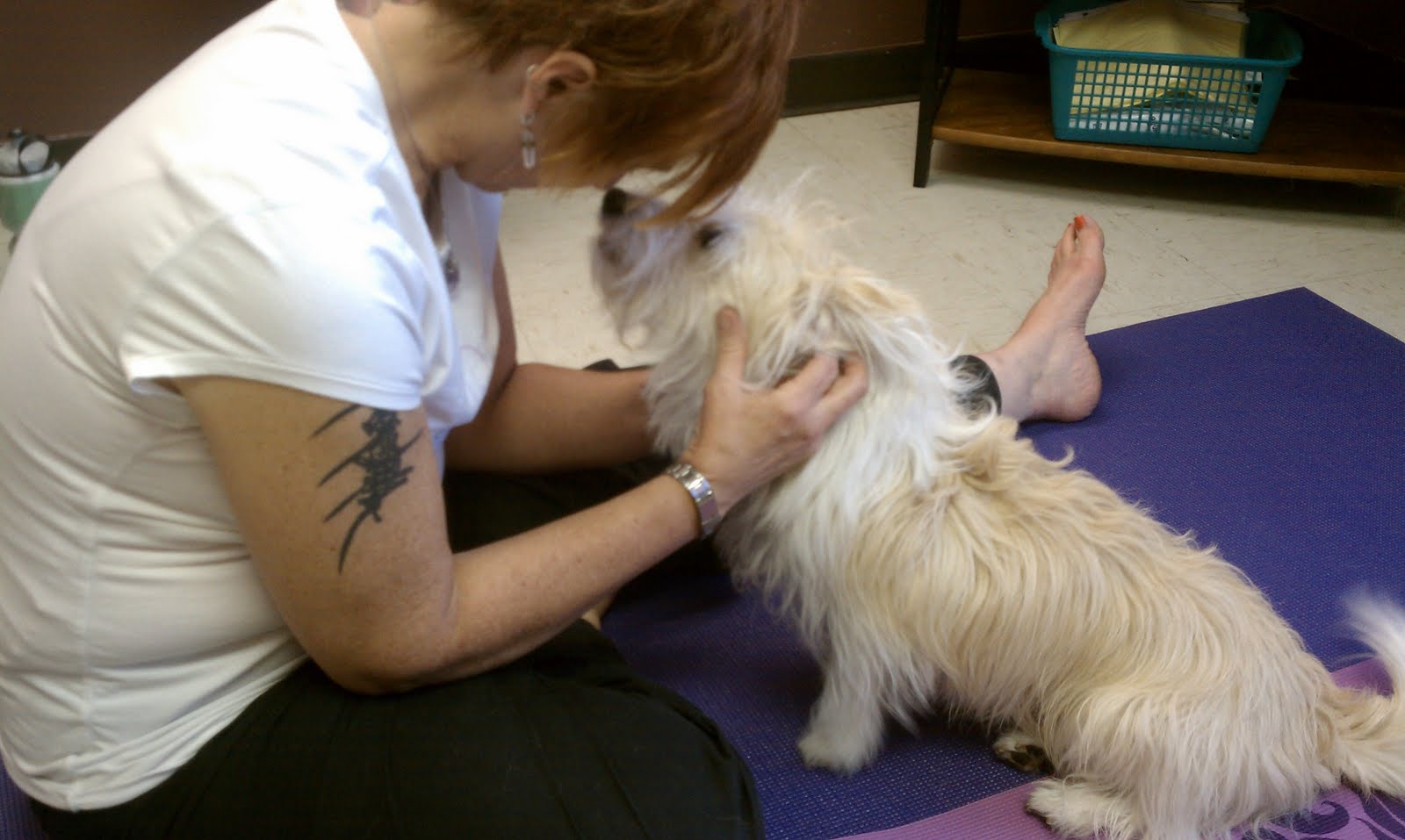
Is this dog reactive?

Thanks to everyone who commented on my post about whether or not reactive dogs should be allowed at trials. I said this in the comments, but just to clarify: no one is seriously suggesting that reactive dogs will be banned from trials. The Rally Advisory Committee did not suggest this, nor did the AKC. It was the personal opinion of a few list members. Most of those people were pretty clear that their objection was not to how a dog is described, but rather to what a dog does. I reiterated that idea, as did all of you, in the comments.

But I wrote the post as a personal reaction to one poster, who criticized a handler they saw at a trial. That handler had described their dog as reactive, and kept the dog in the car until its turn to show, because the trial site was too busy/stressful for the dog otherwise. Even though the dog worked beautifully, and interrupted no one’s performance, the poster thought it was inappropriate for the dog to be there.

Now, maybe this poster is just a jerk. It’s easy to dismiss a differing opinion that way, after all. But I think there’s more to it than that, and I don’t think it’s fair to dismiss that person’s concerns with an insult. Really, I think it comes down to semantics. Specifically, what does it mean when we describe a dog as reactive?

I’ve tried to explain it before, but each attempt seems to have fallen short of the mark. I’ve captured parts of what it means, but “reactivity” is such a nebulous concept that I don’t know that we’ve really agreed on what it all means. Oh, sure, it is pretty universally accepted that a dog who barks, lunges and growls at something is “reactive.” However, there are three areas that I think are still kind of cloudy.

The first area was touched upon in comments: how do you know when a dog is reactive vs. green and inexperienced vs. excitable and over-the-top? Those are three different concepts, but they can look similar. I suspect that each of us might assign the same dog to different categories. I also wonder if the categories don’t overlap. Maisy is, in general, pretty excitable, and I think that fuels her reactivity at times. But where is the line between excitable and reactive? What’s the difference? Is there an underlying personality trait that makes one excitable dog reactive, while another excitable dog is not?

Which brings me to my second question: is reactivity a personality trait, or is it a specific behavior? If someone describes a dog as reactive, do they mean that the dog as a whole is prone to snarky outbursts? Are they describing a personality type? Or are they referring to the behavior in front of them at that moment, the one that looks like barking and lunging? If so, does that means a dog might be reactive at times, but not at others?

When I describe Maisy as reactive, I mean it as a description of what she’s capable of. In a bad week, one full of stressful things like trials and big scary dogs and bicycles, she has, at most, 60 minutes of reactive behavior- barking, lunging or growling. Sixty minutes out of 10,080 minutes in a week. That’s one-half of one percent of the time.

But I still call her reactive, not because it’s an accurate descriptor of what she’s like most of the time, but because it reminds me that there is the possibility that she’ll go over-threshold. Because I call her reactive, because I have that reminder, I do things differently with her than I would otherwise. I leave her at home instead of taking her to the big family barbecue where there are half a dozen kids running around. I enter her in one day of trials, not two. Calling her reactive reminds me that I need to honor her needs, and that I must protect her from excessive stress.

She’s improved greatly over the last two years, and that number has dropped dramatically. Which brings me to the last thing that I think is confusing: can a dog be cured of reactivity? Is there ever a point where a reactive dog will abandon the bark-growl-lunge behavior? And if it does, is that the result of good training, good management, or both? Assuming that a reactive dog can be trained to the point that it no longer displays reactive behavior, how long does that need to go on before we quit calling the dog reactive? Do we need to worry about the possibility of regression? And, if the dog ends up in a new home, will the reactivity re-emerge or go away entirely?

I ask this last question because I think that if I treated Maisy like the typical American dog- one that hangs out at home instead of going to classes and trials- she would probably have so few episodes of reactive behavior that I would have never realized she has this tendency! But, I like to do performance stuff with her, and I daresay she enjoys it, too, so the reactive behavior is present in our lives. But if it wasn’t, if I had chosen to just hang out with her at home, she would still have the same personality. How would I have described her then? As nervous or fearful or mildly anxious? Because all of that is true, too.

Going back to where we began, do you see now why I wondered how the commenter in question might define reactivity differently than I do? Did he, perhaps, believe that when a dog is called reactive it refers to behavior, not personality? Or did the handler with the reactive dog in that story call her dog reactive as a reminder to honor her dog’s needs, and not as an assessment of how the dog behaves the vast majority of the time?

I know I spend a lot of time trying to figure out what we mean by words, perhaps more time than is really necessary, but I’ve always believed that there is power in words. More importantly, we can prevent misunderstandings and the hurt feelings that result if we are clear in what we mean. I would love to see the terminology around reactive dogs cleared up so that we all know exactly what it means when we give a dog that label.

Now it’s your turn: what does the word mean to you? How would you answer any of the many questions I've asked? Do you think it matters how we define the word, or am I over-thinking things? I'd love to hear your opinions!

Wednesday, April 14, 2010

Attack!

This is not at all the post I was planning to write tonight. For one thing, I have several more Suzanne Clothier seminar recaps left to go, and for another, I had already started drafting one about the importance of routines for our reactive dogs. However, life has intervened, and I simply must talk about it.

When I got home from work today, I took Maisy for our usual afternoon walk. We generally follow the same path, and today was no exception. I headed up the same street we always take. The only real difference is that today I didn't have my iPod on. (Is it geeky to listen to dog training podcasts while I'm walking the dog?) I'm glad, too, because as we began to walk by a particular house, a large, dark grey dog came out of nowhere and bowled Maisy over. I didn't even see the dog coming- it was just all of a sudden there.

So, Maisy's on the ground, yelping, I'm holding on to her leash, which is inadvertantly jerking her around as she tries to escape, and there's this huge dog trying to do who-knows-what to her. I've got about a million thoughts running through my head: Should I drop the leash? How do I get this dog off? Is Maisy okay? How can I keep her safe? Does she know I'm trying to protect her?

In the end, I held on to the leash, though after an emergency call to one of my trainers, I decided that next time I'll drop the leash. She probably could have gotten away, and she has a darn decent recall; she would have come back. Getting jerked around on the leash only prevented her from protecting herself, probably hurt and/or scared her, and was probably not very helpful.

I also did something I feel awful about: I kicked the other dog. Hard. I'm really not one to use punishment, and I was pretty angry at the presumed owner for doing so just moments later... But it was a knee-jerk reaction, and it worked; the kick stunned the dog long enough that Maisy and I were able to get away. The probable owner then grabbed the other dog by its choke chain and briefly hung it off the ground. I wanted to tell him that wasn't going to help, but what could I say? I had just kicked his dog.

Did that help the situation? Or was I at risk of redirected aggression? Will that make the other dog worse in the future? What could I have done instead? Why haven't I bought that citronella spray yet, and even if I had it, would it have helped, or would it have stressed Maisy out even more? Did Maisy see my action as protecting or defending her, or did she see it as evidence that I might be a wee bit unstable? And, what else could I have done to help her feel like I had her back?

So far as the most important question, that of "Is Maisy okay?", well, only time will tell. She seems physically okay. She was limping slightly on her left rear, but she had a chiro visit yesterday with orders to take it easy for a week due to some issues we found, which means that that slight limp could have been unrelated to this incident. But I have no idea how she is emotionally. Her immediate response was pretty good; she bounced back quickly, and we walked away eating treats without too much stress. However, later in the walk, she froze and looked worried when she heard another dog bark. What kind of fall out will I see, and when?

And... was it really an attack at all? I'm not sure. It all happened so fast, and I'm just not that good at reading dog body language. Was it simply a very over-enthusiastic greeter? I suspect so, because if the dog had really wanted to do damage, he could have.

So, if it was just a dog being a dog, albeit a poorly mannered one, should I report this to animal control? The dog was off leash, and my city has pretty strict leash laws, at least on the books. But was he dangerous? If I report this, will his owners punish him again, or worse? Will they retaliate at me because I kicked their dog? At least they live several blocks away... I'll have to see if I can report anonymously, or at least have my name withheld.

As you can see, I have many, many questions, and very few answers.