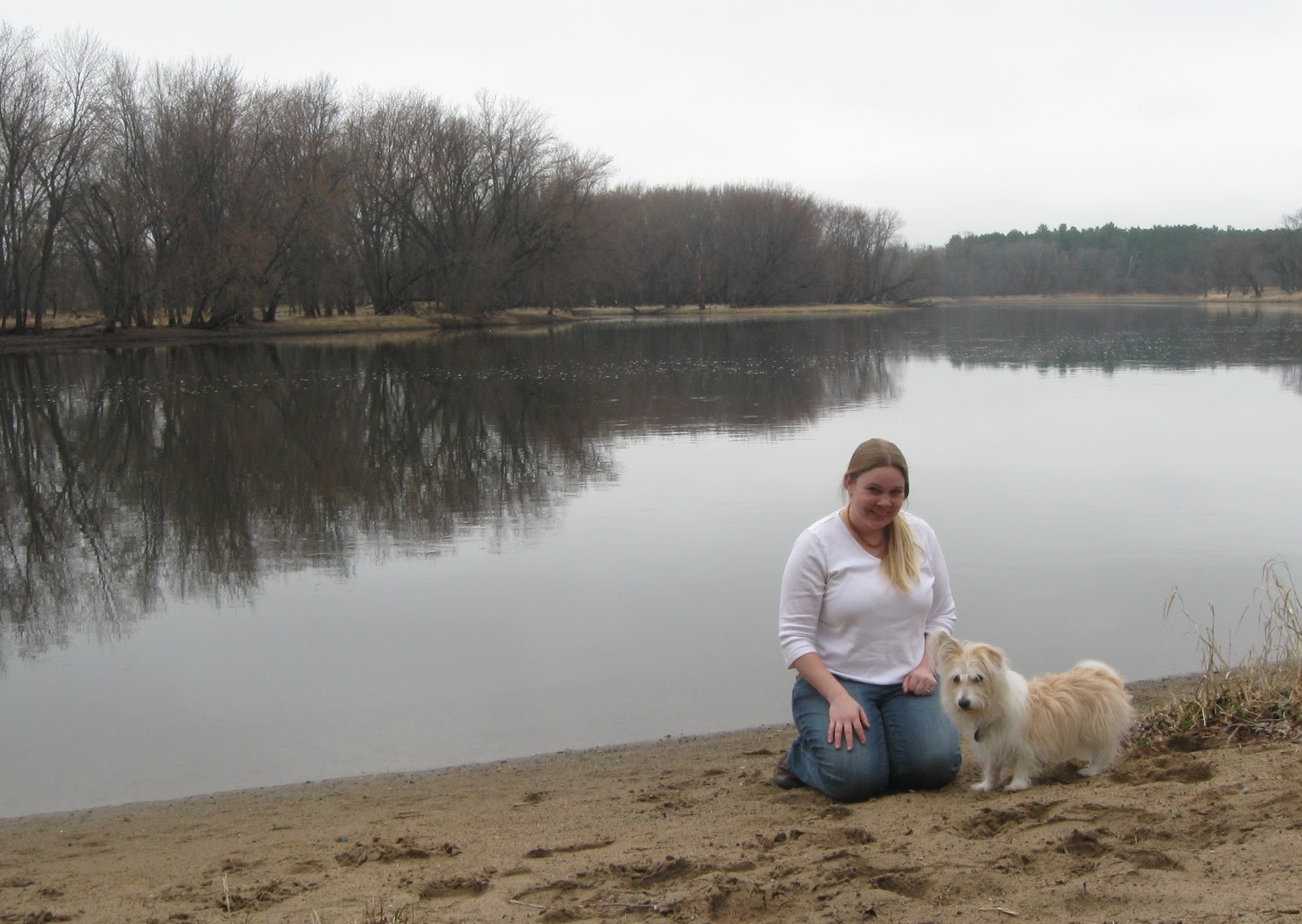
It's been about a
month since Pyg came into our life. That really isn't very long, but
he's fit into our lives so seamlessly that it feels like he's been
here forever. I cannot begin to express how much I love him and how
happy I am that fate brought us together.
I knew going into
it that foster dogs/newly adopted dogs often take several weeks or
months to really settle in and express their true personalities. I
definitely saw glimmers of who Pyg is early on, but it's been fun to
watch him blossom.
Here's what I know
about Pyg so far:
He's playful.
Perhaps this is just youthful exuberance, but Pyggy loves playing.
Whether it's with another dog or by himself, Pyg has a cheerful
attitude. Maisy still adores playing with him. I see her initiating
play with him at least once every day, sometimes more. For her part,
she's getting less awkward. At first, she was convinced that humping
him was the best invitation to play ever, but now she's doing more
appropriate play bows.
He can entertain
himself. This is awesome, because if Maisy doesn't want to play and
he does, he's perfectly content to go off by himself with a toy. His
favorites are long floppy toys that he can shake and kill. He's not
much into dissecting them, which is fine with me. He also likes to
pick up Kongs and throw them in the air, and oddly, empty cat food
cans.
He has an
off-switch. Pyg is also quite happy to take a nap or chew quietly on
something appropriate. He loves his Nylabone (Maisy never touched
them as a puppy), and Kongs, too. He's a fan of bully sticks and cow
hooves. And when he's tired of chewing, he'll take a nap. I suspect
some of this will change as he gets more comfortable. The other day
he chewed on a wooden yard stick.
He is less intense
than Maisy. Although this will likely change as he continues to
settle in, so far he's a bit more subdued. Whereas she will clearly
(obnoxiously) make her desires known, he tends to be a bit subtle
about it. After two brief scuffles, he's learned not to take food
from Maisy, and if anything drops in the kitchen, he'll back away.
Poor Pyg; Maisy can be a bit of a bitch. That said, he's not afraid
to take advantage of things. The other day he swooped in and stole
Maisy's Kong when she left it to tell off the cat.

He's definitely a
lap dog. Oh my. Where Maisy really, really doesn't care to be touched
(she will cuddle on occasion, but only briefly, and only when it's
her idea), Pyg loves nothing more than to be with people. He will
curl up on my lap, or worm his way between me and my boyfriend when
we're together. He loves to be petted, and we've begun to discover
all his favorite rubbing spots. If I stop petting him, he'll rub his
face on my hand. It's adorable.
He doesn't like to
be left alone. I wouldn't call it separation anxiety, but it's clear
that Pyg's had a bit of upheaval in his short life. I've been
watching him pretty closely, and he's definitely getting better about
it, but if he had a choice, he'd go everywhere with me. On a similar
note, he does not like being contained. Four foot x-pens? Yeah, he
climbs over them. Baby gates? Knocked over. Wire crates? Escaped
from... although I don't know how. It wasn't destroyed. Sigh.
He loves food, and
he's an eager learner. I'll post soon about our training, but let's
just say that he is quite willing to work for kibble at home, and
that I'm having a ton of fun putting some foundations on him. It also
inspires me to get back to training with Maisy again. I'd like to get
them both into classes sometime soon, but... money. And time.
He's a bit
cautious about new dogs. This is perhaps the most interesting thing
of all, and I'm curious to see how it'll shake out. He's had a few
minor outbursts. Nothing I would call true reactivity, but given his
age (10 months) and the fact that reactivity tends to emerge during
social maturity (a year and a half or so), I'm being pretty proactive
with him. Again, I'll write about this soon, but right now he tends
to be a bit wary, though it is lessening as he settles in.
That said, he's a
confident little bugger. The other night he was up on a wobble board
like he'd done it his whole life. Maisy, who has actually been around
wobble boards her whole life, just looked at him like he was crazy.
He will jump on counters and climb on uneven surfaces. He is so
different from Maisy in this way.
He definitely
makes me laugh. Although he's kind of physically ugly (a matter of
personal preference, I know), I can't help but call him cute when I
watch him running around. He's just... wonderful. I adore this little
dog, and I'm so very grateful to everyone who cared for him when he
was a pup and made it possible for him to come home.