Maisy and I went to a CDSP obedience trial this weekend. Although she's not perfect (we had an NQ on our first run of the day- more on that later this week), she tries hard and is capable of some excellent work:
She received a 197 for 4th place. She was also the high scoring mixed breed of the day! Go Maisy!

Sunday, April 15, 2012

Thursday, April 12, 2012
Be True
Have you ever heard the expression, “The only thing two trainers can agree on is that the third trainer is wrong?” While a bit hyperbolic, the underlying message is true. I spend a lot of time lurking on email lists and blogs. I’ve read dozens of books. I go to seminars every chance I get. And if there’s anything I’ve learned, it’s that there are some strong disagreements about the best way to train a dog.
So what’s the deal? How can all of these wildly contradictory methods be right? Are some of the examples just a fluke? Are people lying? I don’t think so. Even when I’m sitting there, shaking my head, I still believe that their method works. Just not for my dog. Or, perhaps more accurately, for me.

I began thinking about this recently after I attended the Jane Killion seminar. As I said then, Jane is an incredibly talented trainer, and I have no doubt that she gets amazing results from the dogs she works with. But I just couldn’t imagine emulating her. No matter how wonderful her results, I just couldn’t see myself doing those same things with my dog. Not because she’s wrong. Because I am not her.
When I was in college, I was taught that the social worker’s greatest tool is not the theories we were learning. Nor is it the interpersonal techniques we learned. Instead, the social worker’s greatest tool is her self. We spent an almost painful amount of time exploring our past. We needed to examine how our personalities, beliefs, values, cultures, and experiences would impact our work. To become a good social worker, we were told, you must master both the clinical skills learned in school and authentically integrate your self into that process.
Although I hated those classes, I have come to appreciate the message. I cannot be anyone except who I am, and trying to put on what I perceive to be the “correct” social worker persona has been fruitless. People can spot a fake a mile away, and since my work is dependent on my ability to form relationships with my clients, I need to be genuine. My professional knowledge and skills are best implemented when done in a way that is consistent with my personality. Or to put it more simply: my best work happens when I am honestly and truly myself.
The same thing is true when it comes to dog training. It seems to me that perhaps the hardest part of teaching our dogs is not learning the theories and the skills needed, but rather, finding a way to use that knowledge and those abilities in an authentic way.
Of course, this is not to say that we shouldn’t adapt our approaches. One of the most basic principles of social work is to meet your client where they are. Regardless of the species, everyone I work with is an individual. You have to train the dog in front of you. Therefore, the challenge in dog training is finding a way to meet the dog’s needs while still remaining true to your self.
Personally, I have found that I do best- with both people and dogs- when I can praise often and laugh with abandon. It is impossible for me to separate out my sometimes quirky sense of humor from my professional self. Sometimes I need to temper it, but I would be as fake as a five dollar bill (bonus points to anyone who gets that joke!) if I couldn’t express that part of my self at all. As a result, I have found that Denise Fenzi’s highly energetic and enthusiastic style resonates deeply with me, and I am forever grateful that she showed me it’s possible to train that way.
What about you? How do you use your self in training? Have you found some styles work better with your personality than others? Let me know!
Further Reading on the Concept of Self in Social Work
The Conscious Use of Self, by Heydt and Sherman
An Introduction to Use of Self in Field Placement, by Walters
Use of Self and Ethics Risk Management, by Reamer
So what’s the deal? How can all of these wildly contradictory methods be right? Are some of the examples just a fluke? Are people lying? I don’t think so. Even when I’m sitting there, shaking my head, I still believe that their method works. Just not for my dog. Or, perhaps more accurately, for me.
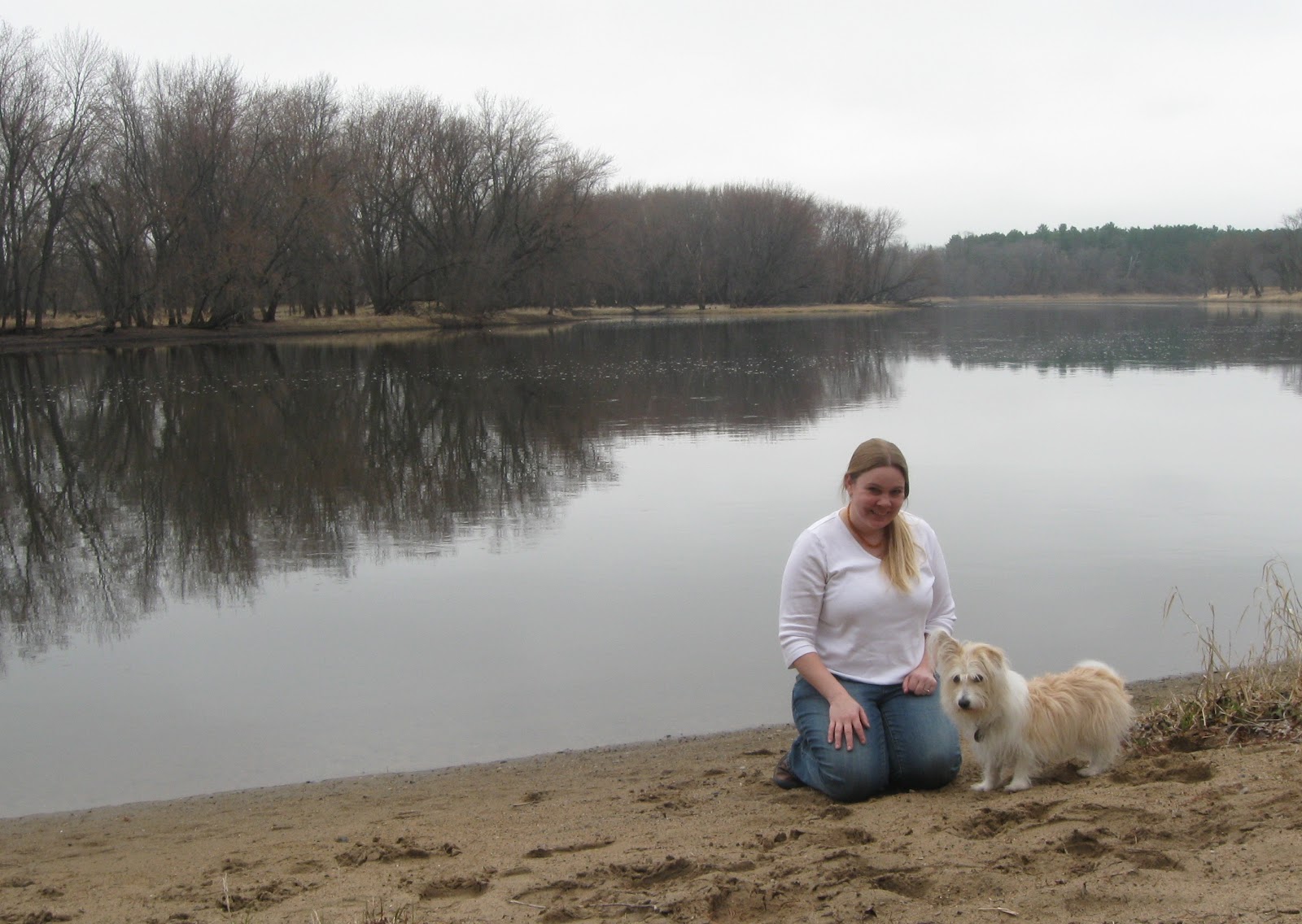
I began thinking about this recently after I attended the Jane Killion seminar. As I said then, Jane is an incredibly talented trainer, and I have no doubt that she gets amazing results from the dogs she works with. But I just couldn’t imagine emulating her. No matter how wonderful her results, I just couldn’t see myself doing those same things with my dog. Not because she’s wrong. Because I am not her.
When I was in college, I was taught that the social worker’s greatest tool is not the theories we were learning. Nor is it the interpersonal techniques we learned. Instead, the social worker’s greatest tool is her self. We spent an almost painful amount of time exploring our past. We needed to examine how our personalities, beliefs, values, cultures, and experiences would impact our work. To become a good social worker, we were told, you must master both the clinical skills learned in school and authentically integrate your self into that process.
Although I hated those classes, I have come to appreciate the message. I cannot be anyone except who I am, and trying to put on what I perceive to be the “correct” social worker persona has been fruitless. People can spot a fake a mile away, and since my work is dependent on my ability to form relationships with my clients, I need to be genuine. My professional knowledge and skills are best implemented when done in a way that is consistent with my personality. Or to put it more simply: my best work happens when I am honestly and truly myself.
The same thing is true when it comes to dog training. It seems to me that perhaps the hardest part of teaching our dogs is not learning the theories and the skills needed, but rather, finding a way to use that knowledge and those abilities in an authentic way.
Of course, this is not to say that we shouldn’t adapt our approaches. One of the most basic principles of social work is to meet your client where they are. Regardless of the species, everyone I work with is an individual. You have to train the dog in front of you. Therefore, the challenge in dog training is finding a way to meet the dog’s needs while still remaining true to your self.
Personally, I have found that I do best- with both people and dogs- when I can praise often and laugh with abandon. It is impossible for me to separate out my sometimes quirky sense of humor from my professional self. Sometimes I need to temper it, but I would be as fake as a five dollar bill (bonus points to anyone who gets that joke!) if I couldn’t express that part of my self at all. As a result, I have found that Denise Fenzi’s highly energetic and enthusiastic style resonates deeply with me, and I am forever grateful that she showed me it’s possible to train that way.
What about you? How do you use your self in training? Have you found some styles work better with your personality than others? Let me know!
Further Reading on the Concept of Self in Social Work
The Conscious Use of Self, by Heydt and Sherman
An Introduction to Use of Self in Field Placement, by Walters
Use of Self and Ethics Risk Management, by Reamer
Tuesday, April 10, 2012
Training Tuesday: High Distraction Obedience
Maisy and I are attending an obedience trial this weekend. I'm hoping to finish her CD-C title. We haven't done much obedience training since our trial in December. Our house is small, and it was cold and dark when I got home from work, making our training field difficult to use. Thankfully, spring came early to Minnesota, and we've been working diligently over the last few weeks!
Today's video is HIGH DISTRACTION. You can't see it, but you can certainly hear the half a dozen or so kids on the playground that's only 30 feet or so away from where we set up. (It's just barely off camera to the right. If you look carefully, you can see the sandy edge of playground in the middle right side of the frame.) You'll also notice that I put a ball on the figure 8 “post” in the beginning. And yes, those are children on bikes in the background- two of Maisy's big triggers.
Some notes: first of all, no, I do not normally train on concrete. I don't think it's good for her joints to run/chase her ball like that, so usually we work on grassy or sandy surfaces. But I didn't think one session would hurt, and I wanted to set up there so we could work near the distractions (and there was a convenient place to set my video camera).
I find it hilarious that Maisy is getting “jump sucked” in the video. I worked hard to build value for the jump. Now I need to help her build some self-control. After the trial, I'll start working on proofing that.
A number of bad habits have reemerged over the winter. She's forging again, her sits are terribly crooked, and she's going wide. I suspect all of this is partially due to her short stature- it's hard to make eye contact when you're close and in proper heel position! Some of it is also probably because she's a little stressed. This was a hard training scenario, and whenever you increase one criteria, you have to loosen the others temporarily.
But I also think that some of her going wide is because of how I walk. Look how my left foot sometimes swings out towards her (and how she compensates for that). It's especially obvious at about 2:30 in the video. Boy, do I have some stuff to work on.
Overall, though, I was really happy with this session. I love Maisy's enthusiasm and engagement during the session. She's giving me a lot of attention, too! Although I have a sneaking suspicion that if we Q this weekend, our score might not be as high as our first time out, I'm pretty excited for the trial anyway. Time spent with my dog is always awesome.
Sunday, April 8, 2012
True Confessions: My Dog is Spoiled
She begs shamelessly during meals, jumps on visitors, and sleeps on my pillow. Unless she wants to sleep somewhere else, of course. Rules? I think she’s up to four now, and one is really more of a suggestion. And if you were to tell me that my dog walks all over me, I’d show you the pawprints on my t-shirt. Literally.

Are you surprised? Although I’ve always been honest in my blog, lately I’ve been a bit more formal. Part of this is because I’ve begun teaching classes and I don’t want to completely embarrass my boss. I figure I should reflect positively on her business, and a poorly behaved dog is probably not a great advertisement.
It’s hard to hide the fact that my dog is spoiled. It could be different, of course- I know how to teach her the skills she’s missing- but I don’t care enough to teach them. She begs because I don’t mind. She jumps on me because it’s easier for me to reach her that way. As for sleeping on my pillow, frankly, I find it endearing. Still, I’m sometimes embarrassed about her “bad” behavior because I know that society expects my dog to act a certain way.
Well, so what? I have spent my time and energy on the things that matter to me. Maisy has a gorgeous heel, is reliable off leash, and gives me an enviable amount of attention. She’s capable of turning in excellent scores in competition. She’s so easy to live with these days that sometimes I forget she ever had any behavior problems. And, if I ask her to, she can act like a good dog. I have taught her “leave it” and “off,” after all!
The truth is, everything we teach our dogs is artificial. It’s stuff that we humans have decided is desirable. Some of it is hygienic- I’d rather not have bodily waste in my house. Some of it is about safety- I really don’t want my dog to bite a child. And some of it is just a preference.
I try to keep this in mind when I’m teaching. As a positive trainer, I avoid the use of force. My goal is to find ways to motivate my dog to choose to do the things I want. I try to do the same thing with my students. It’s easy to feel frustrated when they choose not to do their homework, but one look at my own dog reminds me that it is their choice. Although I can explain the benefit of a particular exercise, ultimately, it’s up to them. Only they can decide what they want their dog to do, what they can tolerate, and how they want to spend their time and energy.
And if they choose to let their dog beg, jump, and sleep on pillows… well, who am I to judge?
Thursday, April 5, 2012
Help! I think my dog is reactive! What should I do?
It was the fall of 2008. I was all settled in at my first post-college job, and I finally had the time needed to pursue dog sports. Excited, I signed up for an obedience class at a local training club. Maisy was just barely two years old, and while there had been warning signs that she wasn’t exactly normal, I didn’t know enough to recognize that. I’d heard of reactivity, but was thankful my dog wasn’t like that. So the first time she barked and lunged at another dog in class, my heart sank.

I was completely unprepared for what was to come. I knew so very little. I couldn’t read Maisy’s body language, I didn’t understand how stress impacted dogs, and I had absolutely no clue what I should do next. What I needed was someone to help me, but our instructor- as wonderful as she was- couldn’t. This is not unusual; there is a huge difference between training obedience skills and modifying undesirable behaviors, and most trainers are experienced in the former with little understanding of the latter.
I’ve learned a lot since then, and I’ve chronicled much of it on this blog. Unfortunately, this knowledge came a bit late, so today, I want to share what I wish I’d known back then. If you’ve just realized that you have a reactive dog and are wondering what you should do next, here are my suggestions.
Take a Break
One of the biggest mistakes people make with reactive dogs- myself included- is to keep putting their dog in situations they can’t handle. It’s easy to do this. At first, I simply didn’t understand what was triggering Maisy’s behavior. It’s hard to avoid things if you don’t know what those things are.
Later, I kept putting her in those situations in order to “socialize” her and “train through it.” This was a mistake. Every time I put Maisy into a situation she couldn’t handle, she learned that I couldn’t be depended on to keep her safe. Maisy is a resourceful little dog, so when it became clear I wasn’t doing anything about the situations that made her uncomfortable, she decided to. She barked and lunged. And every time she did, she got better at it. Reactivity became a habit, and anyone who’s tried to break their own bad habits knows how hard it is. This really slowed down our progress.
This is why my first (and possibly most important) suggestion is to simply take a break. Stop exposing your dog to things he can’t deal with. This might be training classes. It might be trials. It might even be going for walks. Don’t let your dog rehearse behavior you don’t like!
Consult an Expert (or Two)
Of course, it’s both impossible and undesirable to avoid the world forever. Most of us want to do things with our dogs and to take them places, so while taking a break is good in the short run, it’s usually not a long-term strategy.
While on your break, you should use the time to consult with an expert. If the behavior change is sudden, a vet check may be in order. Medical concerns can change the way a dog acts. Although Maisy’s issues aren’t solely the result of her health, they do get worse during allergy season or when her back hurts. Get your dog checked out.
Next, find a trainer. I’ve written before about why I think you need a trainer. Reactivity is a spectrum; there’s a huge range of behaviors your dog can display, and the reasons behind them can be just as varied. It is highly likely you will need some help parsing it all out. As I already noted, you don’t want just any trainer. While there are very talented folks teaching obedience, agility, etc., you need someone who’s had experience and success with behavior issues.
Read, Watch, Go
If you have a reactive dog, you need to learn and you need to learn fast. If you’ve hired a trainer, it is possible to skip this step… but I don’t recommend it. There are many ways to approach reactivity, and it’s helpful to understand multiple perspectives. Even if you have the best trainer out there, sometimes hearing things from a different point of view will help give you the clarity you need.
Start by learning about different training methods. I strongly favor positive, reward-based methods. It’s not that other methods don’t work- they can- but there is a higher risk of fallout. Check out this position statement by the AVSAB for more information.
Next, learn about dog body language and stress signals. It’s amazing how much we miss simply because we don’t know to look for it. There are tons of DVDs, books, and websites devoted to learning to understand what you’re dog is telling you.
Continue your education by learning about the different protocols designed for reactivity. From basic desensitization and counter-conditioning to more sophisticated programs like Control Unleashed and BAT, there are lots of ways to approach the problem. Find out more about them, and discuss them with your trainer. Find out what she prefers and why. Together, choose one that you both feel comfortable with and that seems like a good fit for your dog.
Finally, build up a support system. Blogs, email lists, and in-person friends are all places you can go to exchange ideas, commiserate about set-backs, and celebrate successes!
Keep Records
I know, I know. It’s really not that much fun, but records can be incredibly valuable. It wasn’t until I started logging incidents that I realized just how anxious my dog was. I was so accustomed to her behavior that I didn’t really recognize it as abnormal. Seeing it all in black and white helped me understand just how much help she needed.
This doesn’t need to be a massive undertaking. Your records can be as simple as a brief note on a calendar or as complex as an Excel spreadsheet. The format is less important than simply doing it. They will help you identify triggers, notice subtle behavior patterns, and track your progress.
These are the things I wish I had known almost four years ago. I’ve learned much since then… most of it the hard way! Although there is no shortcut through reactivity, the sooner you enlist help, the quicker it will be.
For those of you who have been there, done that, what do you wish you’d known? For those of you who are new to this, what other questions do you have? I’d love to hear from you!
Tuesday, April 3, 2012
Training Tuesday: Trick 3 (In Progress)
No, I haven't forgotten about my 12 tricks in 2012. But I have officially fallen behind because I chose the hardest trick IN THE WORLD. Or at least, it's hard when you have a dog with short, stubby little legs. We're working on "cross your paws," and honestly? We're getting close. See for yourself:
Sunday, April 1, 2012
Reactivity is a Spectrum
In my day job, I work with children with disabilities, and roughly half of them have autism. They range from non-verbal to incessant talkers. Some are completely dependent on others, while others are thriving in society. A few of them have intense behaviors, while others are well-adjusted kids. In other words, none of them are the same. There’s a reason they call it the autism spectrum.
The more I learn about dogs, the more I become convinced that reactivity is also a spectrum. While we tend to label any dog who demonstrates over-the-top behavior as “reactive,” there are an almost infinite number of variations on the theme. It’s not a neat, linear spectrum, either; there’s no orderly progression of behaviors going from one end to the other. Just like with autism, things combine in unexpected ways in reactive dogs.
Some reactive dogs are like my own. Much of Maisy’s over-the-top behavior was fueled by a clinical anxiety disorder. Although we’ll never know for sure, I tend to believe that there is probably a strong genetic component to her behavior.
Speaking of genes, we have created breeds of dogs that are very focused on their environment. For example, many herding dogs are sensitive to motion- they need to be in order to move stock! But when left unchanneled, this tendency can look a lot like reactivity.
Dogs who don’t receive adequate socialization as a puppy can grow up to be fearful or unsure about novel experiences. This fear can result in a fight-or-flight reaction, and “fight” behaviors are often what we call reactive.
On the other hand, puppies who were allowed to greet and play with everyone they met may be wonderfully socialized while simultaneously having no manners. If they don’t learn how to control their impulses, their frustration may turn into reactivity.
This list goes on and on... I’ve met dogs who were wound too tight, who had medical conditions that impacted their behavior, who had learned they could get attention by acting a certain way, who were trying to gather information about their environment, and I’m sure you can come up with even more.
What’s clear to me is that while it makes sense to group all of these dogs under the label of “reactive” to make it easier to talk about them, it’s nearly impossible to make generalizations or definitive statements. While we can certainly discuss training approaches, handling strategies, and the use of medications or supplements, there is no one-size-fits-all.
It’s the same in my day job. Just as none of the reactive dogs I work with are the same, neither are any of the kids with autism. But what I tell all of my clients, human and canine alike, is the same: they are the experts, not me. Since there is so much variation in behavior, the parent/owner will always understand their child/dog better than I do.
This doesn’t mean that I’m not an educated professional. I know a lot about autism and reactivity, but I don’t live with my clients. I have no way of ever knowing all the ways it plays out in their lives. Despite this, I'm quite good at what I do. In my day job, I am able to find the resources parents need to help their kids, and in the evenings, I can coach people in training exercises that are highly likely to help their dogs. But in both contexts, they get the final say.
The way I see it, my job is not to be right, it’s to help my clients find what’s right for them. I have to be willing to listen to my clients, and then to respond flexibly. It has to be this way, because whether we're talking about autism or reactivity, it's a spectrum. And that means that every case will be just a little bit different.
Subscribe to:
Posts (Atom)